 Inklings World
July 20, 2026
How Do You Teach a Five-Year-Old About Pollination? A Story-First Guide for Ages 4–8
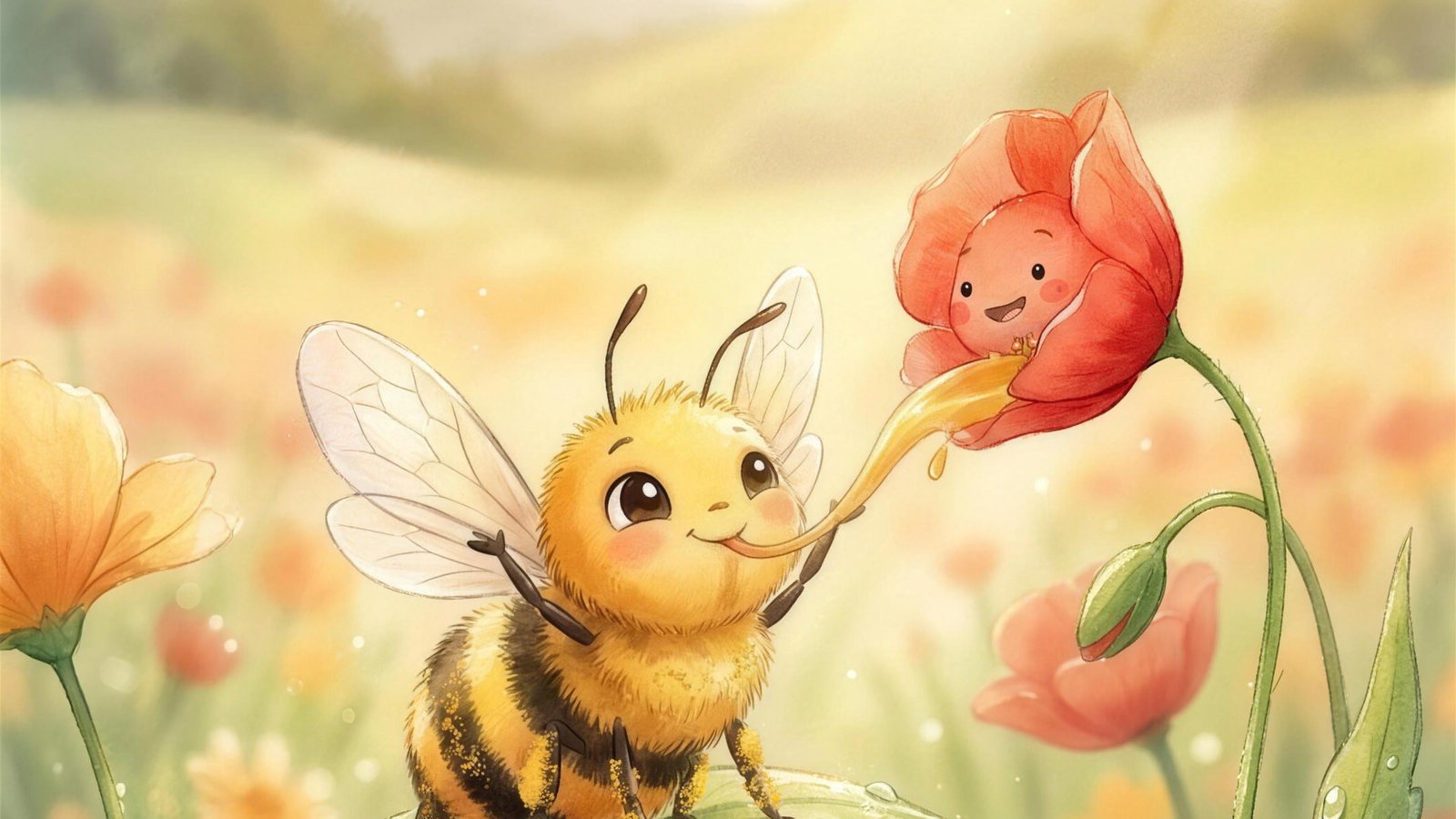
Short answer: don’t start with the word. Start with a bee who thinks she doesn’t need anyone. A four- or five-year-old can’t hold an abstraction like “mutualism,” but they can absolutely follow a character who learns something — and the science arrives with the story attached. That’s the whole idea behind Better Together: A Nature Picture Book, a read-aloud for ages 4 to 8, and its companion Better Together: A Nature Coloring Book.
What is mutualism, and how do you explain it to a young child?
Mutualism is a relationship where two different living things both get something they need. The bee gets food. The flower gets carried pollen so it can make seeds. Neither one is being kind — each is looking after itself — and that’s exactly why the arrangement lasts.
For a young child, skip the definition and use the trade:
“The bee takes a drink. The flower gets a delivery. They’re helping each other without even meaning to.”
That framing does something a diagram can’t: it removes the idea that helping requires being nice. Kids find that genuinely interesting, because it’s a little bit sneaky.
Why does a story work better than a diagram?
Because a diagram answers a question the child hasn’t asked yet.
A four-year-old has no reason to care how pollen moves. But give them a bee who insists she can do everything by herself, then let the meadow start to wilt, and now there’s a problem worth solving. The science becomes the answer to something they already want to know.
That’s the order we build every Inklings World book in: story first, science woven in, never preachy.
What’s inside Better Together: A Nature Picture Book?
Bea is a little bee who is sure she can manage on her own. She zips past a butterfly named Flit, a hummingbird named Hum, and a bright red flower named Poppy, and tells them all she’s doing just fine by herself.
Then the flowers begin to droop. The nectar runs low. And Bea, sitting still for once, notices something dusty and gold clinging to her own fuzzy legs.
At a glance:
- Ages 4 to 8, written as a read-aloud
- 34 pages, 8.5 × 8.5 inches, full color throughout
- Soft watercolour illustrations on every spread
- A plain-language “What is mutualism?” page at the back, for the grown-up doing the explaining
- Written by O.P. Stevens · Published by Inklings World
The back page is deliberate. Most picture books about nature either skip the science or bury the story under it. This one keeps them separate so the read-aloud stays a read-aloud — and the explanation is there when the “but why?” arrives, usually the next morning.
What’s in the coloring book, and do I need both?
You don’t need both. They’re built to work alone.
Better Together: A Nature Coloring Book is 84 pages containing 39 original designs — bees, butterflies, hummingbirds, poppies, and full meadow scenes — drawn with the thick, simple outlines small hands actually manage.
The detail worth knowing: every design is printed single-sided. The back of each page is blank, so a four-year-old with a marker can go as hard as they like and never ruin the next picture. That’s why the book is 84 pages for 39 designs, and it’s the feature parents notice second and appreciate most.
The two books side by side
| Picture Book | Coloring Book | |
|---|---|---|
| What it is | A read-aloud story | 39 coloring designs |
| Ages | 4–8 | 4–8 |
| Pages | 34 | 84 |
| Size | 8.5 × 8.5 in | 8.5 × 8.5 in |
| Best for | Bedtime, circle time, science units | Quiet time, travel, classroom centers |
| Price | $12.99 | $8.99 |
Which one should I buy first?
If you want the lesson, start with the picture book. The story carries the idea; the coloring book assumes it.
If you want forty minutes of quiet, start with the coloring book. It needs no setup and no reading.
If it’s a gift, the pair works well together — one to read at bedtime, one to hand over in the morning.
How do teachers use this in a classroom?
The picture book fits a spring science unit on plants, pollinators, or ecosystems, and it pairs naturally with Earth Day. It’s short enough to open a lesson and finish with time to talk.
The coloring book works as a center activity or an early-finisher task. Because the pages are single-sided, they tear out cleanly for a bulletin board or a take-home.
And if you’d like to try something before spending anything, there are free printable coloring pages on our site — no signup, no email, just print them.
Frequently asked questions
What age is Better Together for?
Ages 4 to 8. Younger children enjoy it as a read-aloud; six- and seven-year-olds can usually read most of it themselves.
Is the science accurate?
Yes. The story stays true to how pollination actually works — bees collect nectar for food, carry pollen between flowers as a side effect, and the pollen lets the flowers make seeds. The closing page states this plainly without simplifying it into something false.
Do I need to read the story to use the coloring book?
No. The coloring book stands alone. It simply features the same characters.
Is the coloring book good for markers?
Yes, because of the single-sided printing. Every design has a blank reverse, so bleed-through never lands on another picture.
Are these books available anywhere besides Amazon?
Currently Amazon only, in paperback.
Where do the free printables come from?
They’re from the same meadow — Bea, her friends, and the flowers. They’re at inklingsworld.com/free and they’re genuinely free. No email required.
Try it before you buy anything
Print a page, hand it over, and see whether the bee lands. That’s the whole test.
- Free coloring pages, no signup: inklingsworld.com/free
- The picture book: Better Together: A Nature Picture Book — $12.99
- The coloring book: Better Together: A Nature Coloring Book — $8.99
From Inklings World — stories that help curious kids see how the world really works.
As an Amazon Associate I earn from qualifying purchases.