 Inklings World
August 17, 2026 · by Ferris Sutton
A Space Station That Breathes: Meet Keplers Bend
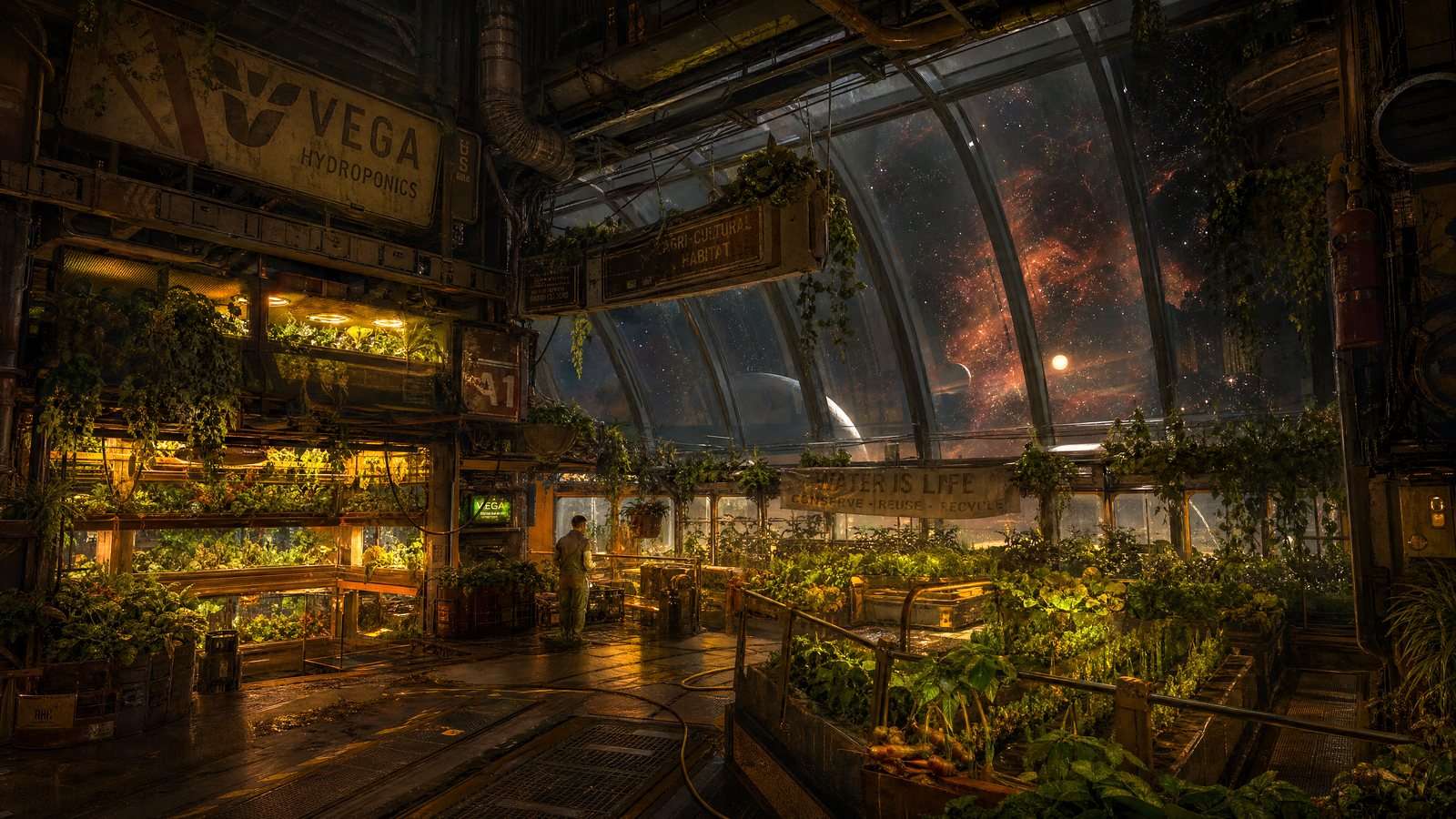
Some science fiction wants to overwhelm you — bigger ships, louder wars, colder space. Keplers Bend wants to do the opposite. It wants to feel like coming home to a place that’s a little creaky, a little stubborn, and quietly alive.
What it is
Far out in the Outer Scatter, a decommissioned deep-space relay has become something no one planned for: a home. Keplers Bend is kept by the sprawling Kaplow family and a silent station AI named Fig, who never speaks — only dims the lights and shifts the hum of the vents. Travellers arrive from across the stars, each carrying a story, and it falls to Maren, the overlooked seventh child, to notice what the station remembers.
It’s cozy, character-driven science fiction — a quiet world, a found family, and the slow, stubborn work of keeping an old place alive. If you love Becky Chambers (Wayfarers, Monk & Robot), you already have a seat at this table.
The opening
Keplers Bend had a personality, and its personality was currently irritable.
Maren Kaplow could tell by the vents. On a content day, the station’s ventilation system produced a low, even hum — the sound of a large animal breathing in its sleep, steady and warm. On a strained day, the pitch climbed half a note, developing a faint, reedy quality that set her back teeth on edge.
A station that breathes, and a girl who treats it like a living thing — that’s the whole book.
Who runs a station this size?
One family, and there are rather a lot of them.
Dessa and Orlan Kaplow bought a dead relay thirty-two years ago with the savings from four years of freight runs and a loan Orlan’s father called a gift. They powered it up and refused to acknowledge that it might not work. Twenty-two children later, every department on the station is run by somebody with the same surname — operations, finance, engineering, the front desk, the kitchen, the docking arms, comms, salvage, the animals, and a hydroponics bay that keeps producing algae nobody asked for.
Maren is the seventh. Not the brilliant engineer, not the visionary, not the one anybody thinks to brief. What she has instead is attention — she notices what a building is doing, and what the people inside it need before they say so. It’s a useless gift right up until the moment it’s the only one that helps.
What actually happens in it
A guest arrives. Then another. That’s most of the plot, and that’s on purpose.
A four-hundred-year-old philosopher checks in and sleeps properly for the first time in a century. A refugee ship docks in the bay reserved for arrivals in distress. Two feuding families hold a wedding in the concourse and a six-year-old falls through the ceiling. A corporate hospitality chain sends a very polite man with an offer, and then sends him back with a worse one.
Underneath all of it, quietly, the station keeps trying to tell Maren something. There’s a door in the AI core that Fig will not discuss. There’s a symbol scratched over a doorway that nobody can translate. And somewhere below the floor, something that has been asleep for a very long time is beginning to notice that the lights are on again.
What is cozy science fiction?
Cozy science fiction is science fiction where the stakes are real but the pleasure is human. It trades spectacle for competence, warmth, and found family — sometimes called hopeful sci-fi or gentle sci-fi, though the label matters less than the feeling: you finish a chapter and want to stay a while longer.
The tension comes from people — what they owe each other, what they’re carrying, what they won’t say at dinner. Nobody in this book solves a problem by firing anything. They solve it by paying attention, and occasionally by cooking.
If you liked these books, you’ll like this one
- Becky Chambers — the Wayfarers series, A Psalm for the Wild-Built. Found family, quiet competence, big ideas held lightly.
- Travis Baldree — Legends & Lattes. The low-stakes, let-them-be-kind-to-each-other register.
- T.J. Klune — The House in the Cerulean Sea. Warmth with an ache underneath.
Same shelf. A hotel instead of a coffee shop, and the building has opinions.
Who is this book for?
- Readers who want science fiction that is kind without being toothless.
- Anyone who reads for character and voice first and plot second.
- People who like enormous families, competent adults, and children who are allowed to be genuinely strange.
- Anyone who has ever loved an old building.
Probably not for you if you want military SF, hard-science exposition, or a body count.
Frequently asked questions
Is Keplers Bend part of a series? Yes — this is Book One: What the Station Remembers. Book Two is in progress, and a short prequel novella is on the way.
Do I need to read anything else first? No. Start here.
Is it on Kindle Unlimited? Yes. Read it free with a Kindle Unlimited subscription, or buy it outright.
Is it “Keplers Bend” or “Kepler’s Bend”? Keplers Bend. No apostrophe — nobody on the station remembers who Kepler was, and the sign was painted by somebody who didn’t care.
How long is it? About 72,000 words — a full-length novel.
Is there romance in it? A little, and gently. It isn’t the engine.
Where to read it
Read Keplers Bend, Book One: What the Station Remembers on Amazon →
Free to read with Kindle Unlimited.
If you’d like to know when Book Two lands, hit Follow on the Ferris Sutton author page and Amazon will tell you.
— Ferris Sutton
Disclosure: As an Amazon Associate, Inklings World earns from qualifying purchases. Links to Amazon on this site may be affiliate links.